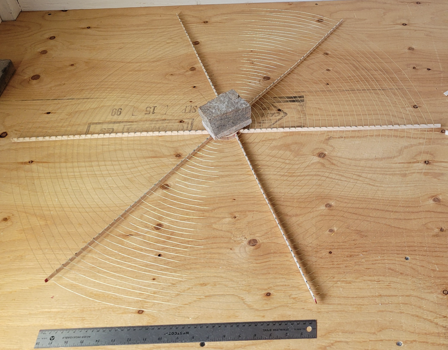
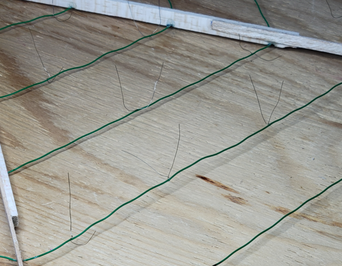
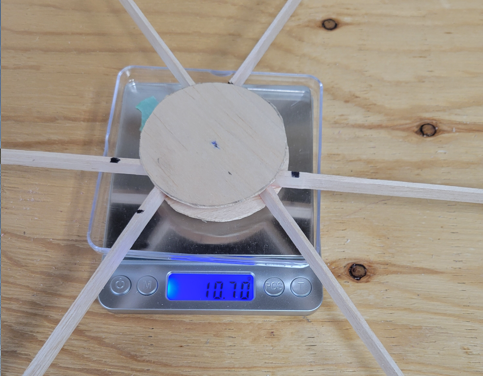
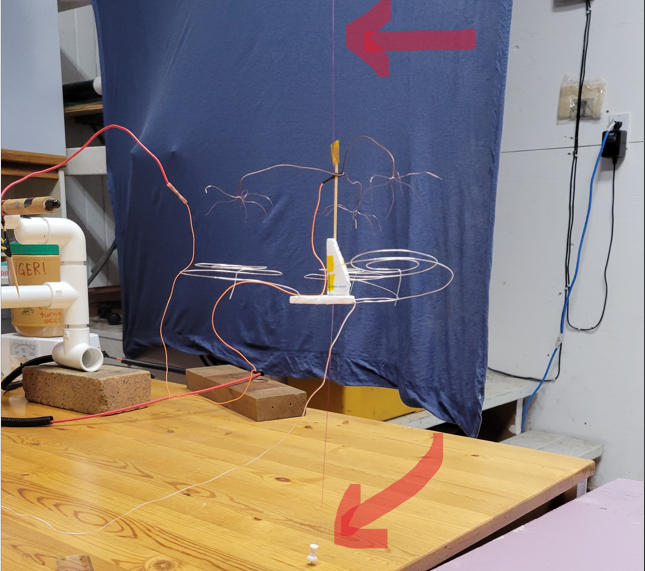
The present Dynamic Electrostatics ionocraft designs are are based on a smooth wire collector (bottom coil) and multiple sharp emitter points. This reduces the ionization onset voltage compared to continuous wire emitters such as are common in traditional "triangle" type foil skirt lifters. This grid and point type of electrostatic lifter is of a general DeSeverski design, which was patented in 1964. The term "Ionocraft" was coined by DeSeverski. When DeSeverski built his original versions the power supplies for high voltage DC were very bulky and inefficient. Since then considerable improvements in size and efficiency have been made. Operating voltage ranges from about 6 kV to 48 kV DC and is generally around 25 to 35 kV. A positive charged collector and negative charge emitters are preferred by Dynamic Electrostatics because it is believed that electrons and ions all going "in the same direction" is best. Full floating DC high voltage is somewhat safer for testing because each polarity is only 1/2 the maximum voltage to ground, but it is harder to safely measure power. Design characteristics determine the best operating voltage. Power is controlled by Pulse Width Modulation (PWM) mostly for transformer type power supplies or by control of the lower primary voltage which is mostly used for Wallcott-Cockcroft type voltage multipliers. Instant-on power supplies are strongly recommended against because it results in instant thrust which is potentially hazardous to both equipment and personnel (See accidental lifter launch video below).